Traditions in Qatar: Culture, Lifestyle, and Social Etiquette
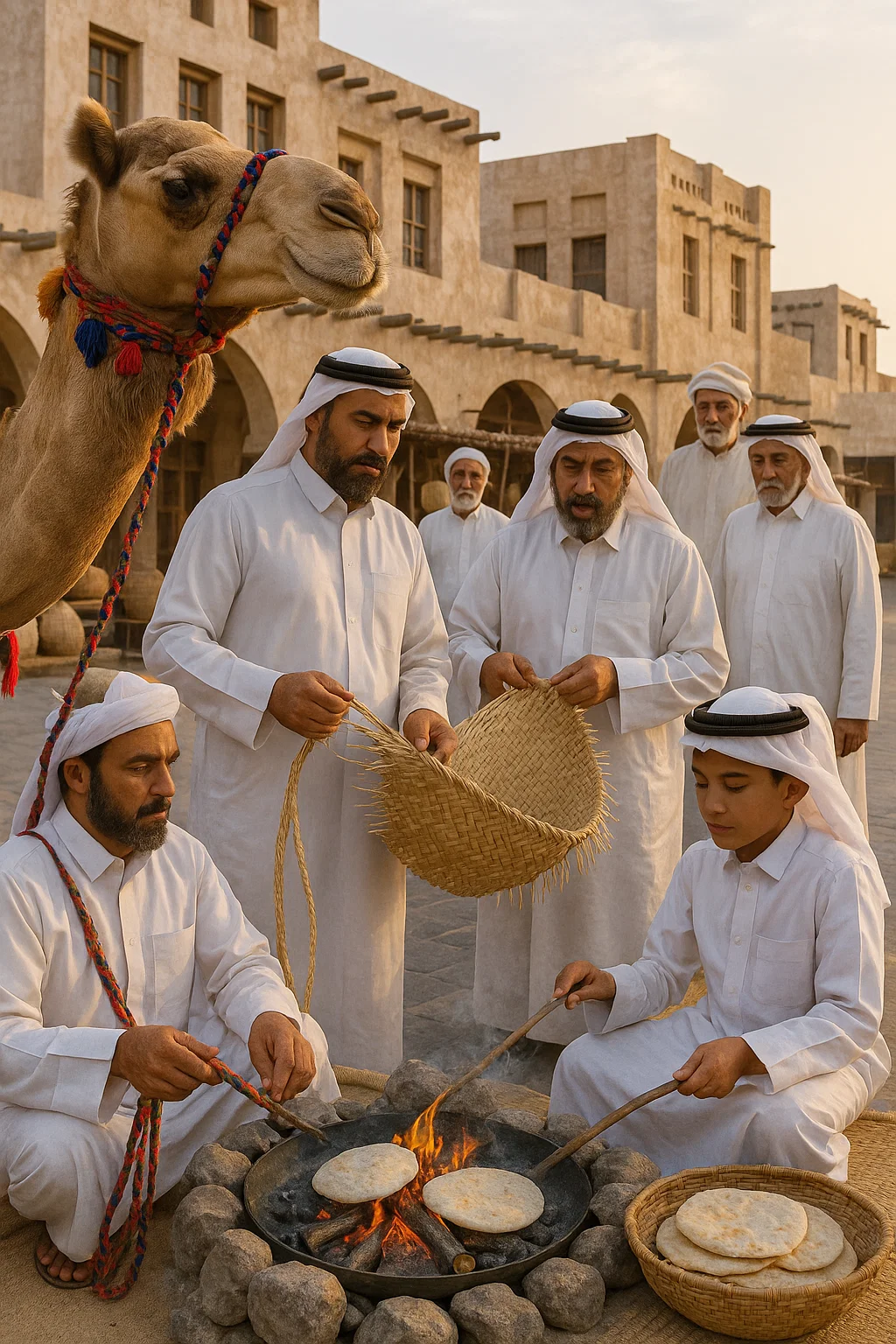
Qatar, one of the fastest-growing nations in the Gulf, has become known for its rapid modernization, economic power, and global role in sports, politics, and trade. Yet behind the glittering skyscrapers of Doha and the international image of prosperity lies a society deeply committed to its traditions. From the Bedouin heritage that shaped desert life to the Islamic customs that guide everyday behavior, Qatari culture balances old and new with elegance.
Qatar’s Traditions and Etiquette
| Category | Details |
|---|---|
| Hospitality | Central to Qatari culture; historically, travelers were hosted for three days with food, drinks, and shelter. |
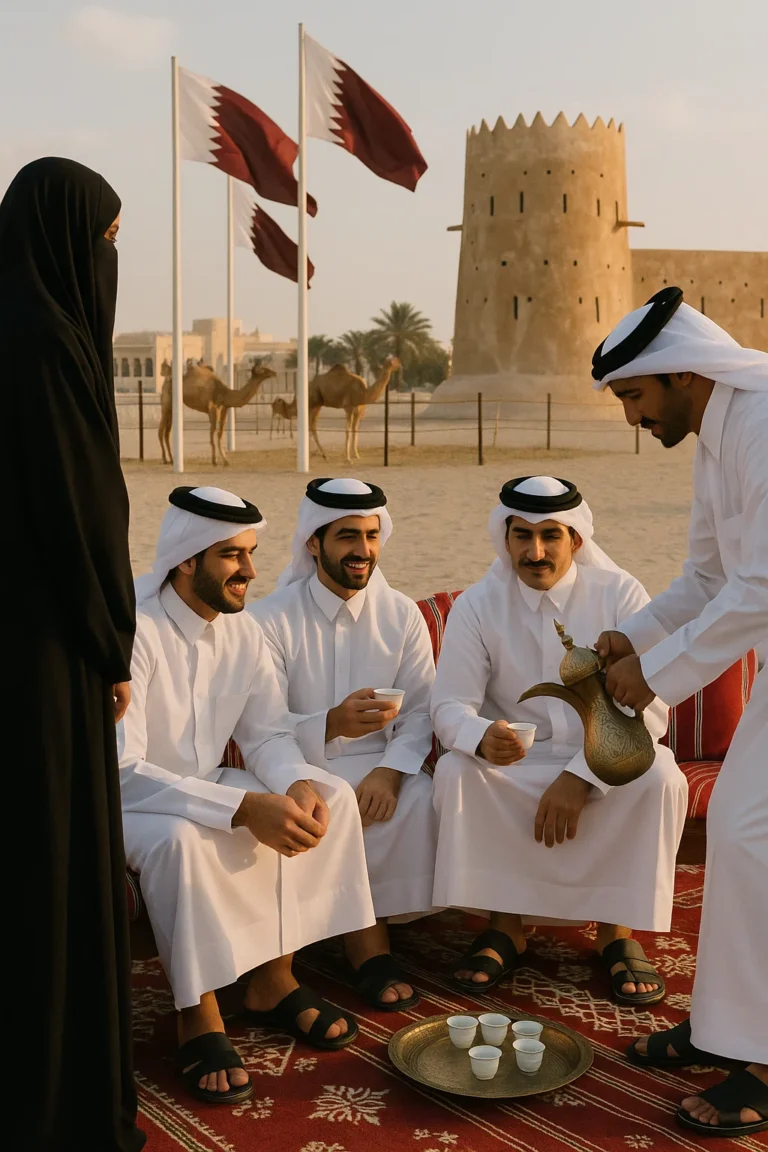
| Majlis | A traditional gathering space where guests socialize, drink coffee or tea, and engage in conversation. |
| Arabic Coffee (Gahwa) | Served with dates as a gesture of generosity and goodwill, rooted in Bedouin traditions. |
| Social Greetings | Elders and those of higher status are greeted first. |
| Religious Customs | Some people avoid physical contact with the opposite sex, greeting instead by placing the right hand over the heart. |
Dress Code
| Category | Details |
|---|---|
| National Dress | Men wear the thobe (long white garment); women wear the abaya (long black cloak). |
| Visitor Clothing | Tourists and residents should wear modest clothing that covers shoulders and knees. |
Visiting a Qatari Home
| Category | Details |
|---|---|
| Accept Hospitality | Guests should always accept coffee, dates, or refreshments as a sign of respect. |
| Observe Hierarchy | Greetings should be made to the eldest or most respected person first. |
The traditions in Qatar are not limited to religious practices—they influence dress, food, family life, hospitality, festivals, and even modern business etiquette. Visitors often find Qatar unique because of its ability to maintain authenticity in an era of globalization. By exploring its traditions, one can better understand not only Qatari identity but also how the nation preserves its values while embracing a cosmopolitan future.
Core Traditions and Customs in Qatar
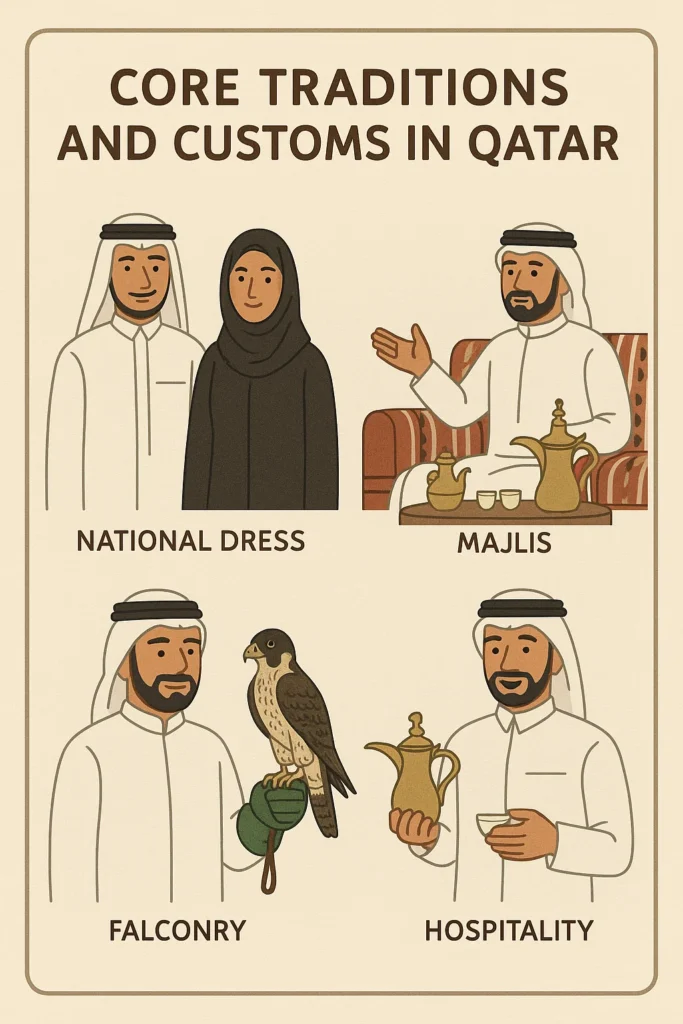
The customs and traditions in Qatar are rooted in Islam, which shapes the rhythm of daily life, social etiquette, and national celebrations. Respect for elders, loyalty to family, and generosity toward guests are central values in Qatari households.
One of the famous traditions in Qatar is hospitality. Guests are offered coffee (gahwa) and delicious dates of Qatar as soon as they enter a home or majlis. Refusing such hospitality is considered disrespectful. Social gatherings are not merely about food but about building trust and maintaining social harmony.
Family traditions in Qatar also play a vital role. Extended families often live in close proximity, and decisions—ranging from marriage to business—are made collectively. Even in urban Doha, family ties remain the foundation of society.
Traditional Clothing in Qatar
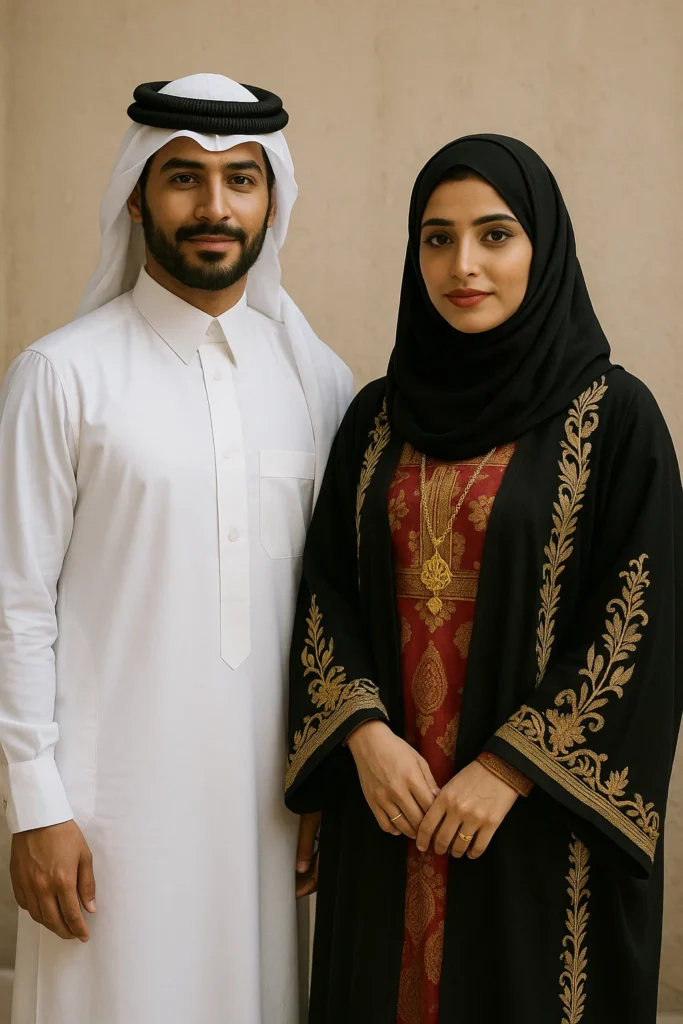
Clothing is one of the most visible aspects of Qatar’s culture and lifestyle, symbolizing modesty, tradition, and national pride.
- Men’s attire: The thobe, a long white robe, is the everyday wear for Qatari men. Accompanying it is the ghutra (white or red-checkered headscarf) secured by the agal (a black cord). This attire is functional in Qatar’s desert climate while symbolizing elegance and simplicity.
- Women’s attire: Women commonly wear the abaya (a flowing black cloak) with a shayla (scarf). During cultural events, women may wear richly embroidered dresses. The Qatar traditional dress female is both modest and fashionable, blending heritage with modern design.
This national dress reflects the importance of identity. Even in corporate settings or international forums, traditional attire is often proudly worn.
Food Traditions in Qatar
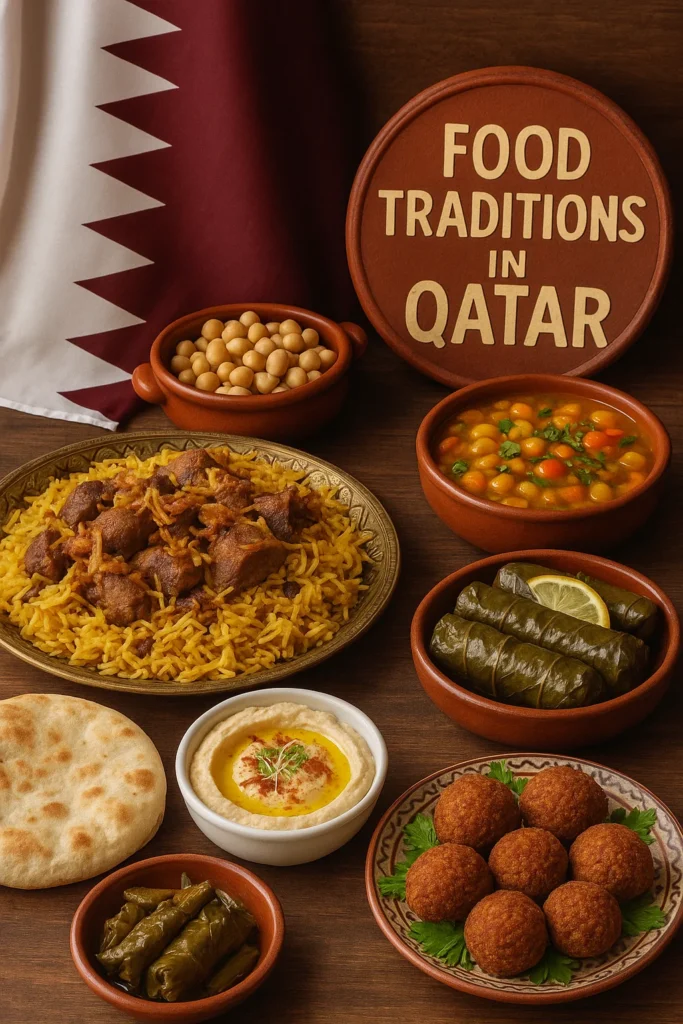
Food is a cornerstone of Qatari identity and hospitality. When discussing Qatar culture food, one must start with Arabic coffee and dates. Serving coffee is a ritual with rules: it is poured with the left hand into small cups held with the right, and guests sip politely before returning the cup.
Famous food traditions in Qatar include:
- Machboos: A spiced rice dish with meat, chicken, or fish.
- Harees: Wheat and meat slow-cooked into a creamy porridge, especially popular in Ramadan.
- Balaleet: Sweet vermicelli topped with fried eggs, often eaten at breakfast.
- Luqaimat: Sweet dumplings drizzled with honey or syrup.
Meals in Qatar are family-oriented, and sharing food is a sign of unity and respect. Restaurants in Doha may offer global cuisines, but traditional dishes remain at the center of cultural gatherings.
Festivals and Celebrations
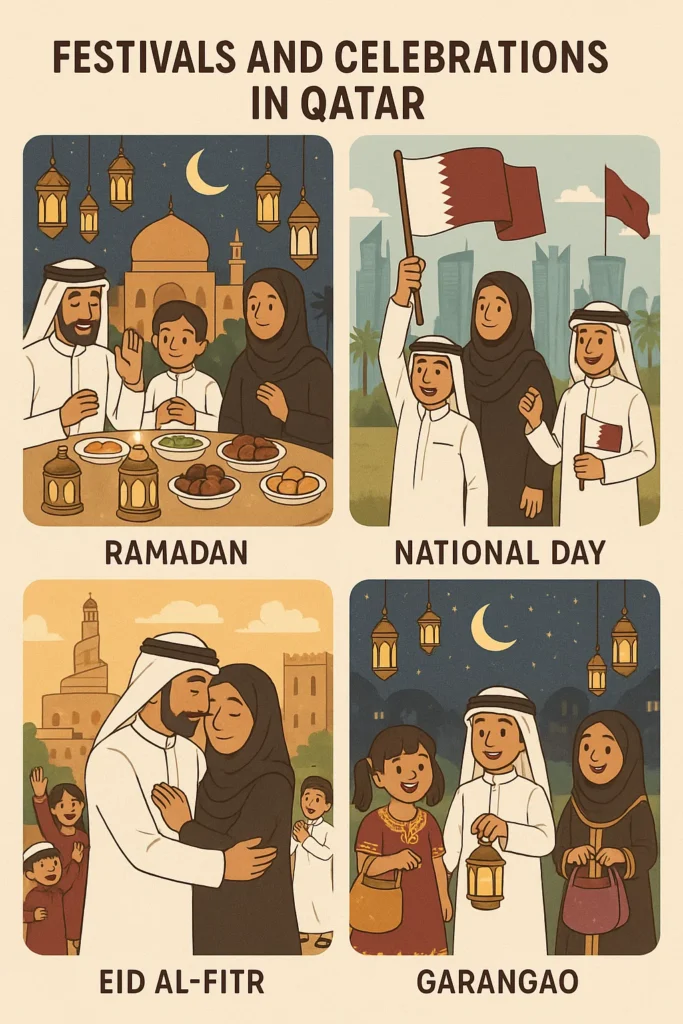
Qatar’s celebrations highlight both religious devotion and national pride.
- Ramadan traditions in Qatar: The holy month is marked by fasting during the day and lavish iftar meals at night. Children celebrate Garangao, a festival midway through Ramadan when they collect sweets from neighbors.
- Eid traditions in Qatar: Eid al-Fitr and Eid al-Adha are the most important Islamic festivals. Families buy new clothes, exchange gifts, and visit relatives. Charity (zakat) is also a key practice during these occasions.
- Wedding traditions in Qatar: Weddings are grand affairs with separate events for men and women, music, henna nights, and feasts.
- National celebrations: Qatar National Day (December 18) features parades, fireworks, and cultural showcases. National Sports Day is another modern holiday that promotes health and unity.
These holidays and traditions in Qatar reflect the society’s commitment to family, religion, and patriotism.
Social Etiquette and Do’s & Don’ts
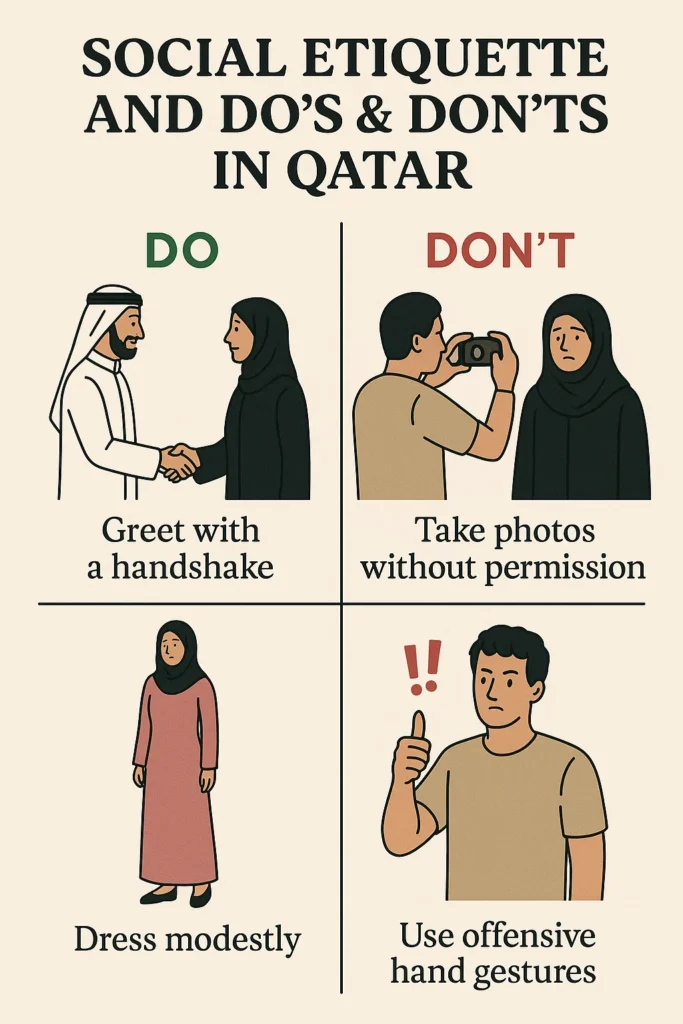
Visitors to Qatar should be aware of Qatari culture do’s and don’ts to avoid cultural misunderstandings.
- Greetings: A handshake and the greeting salaam alaikum (peace be upon you) are customary. Always use the right hand when offering or receiving items.
- Gender roles: While Qatar is modern, conservative values remain. Men and women often interact formally in public spaces.
- Dining etiquette: Meals begin with the phrase bismillah (in the name of God). Guests should wait to be invited before eating. It is polite to use the right hand for eating.
- Public behavior: Modesty is valued. Public displays of affection are discouraged.
These etiquette and social customs in Qatar highlight the importance of respect and cultural sensitivity.
Heritage and Traditional Practices
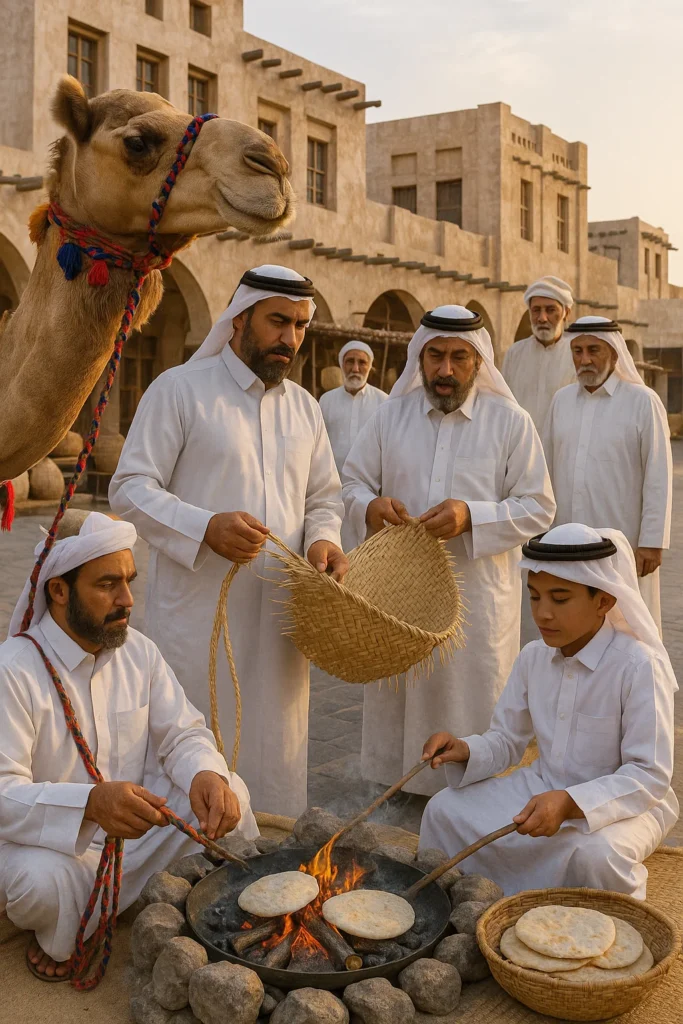
Even as Qatar modernizes, it maintains traditions that connect citizens to their Bedouin roots.
- Majlis culture in Qatar: Recognized by UNESCO, the majlis is a gathering space for men to discuss politics, family, and business. It represents equality, openness, and community spirit.
- Pearls: Before the oil era, Qatar’s economy thrived on pearl diving. The songs and techniques of divers remain preserved as cultural heritage.
- Traditional dhow sailing: Wooden dhows once used for pearl diving and fishing now symbolize Qatar’s maritime past.
- Bukhoor and oud: Fragrant incense and perfumes are burned in homes to welcome guests and celebrate occasions.
- Bedouin traditions: Falconry, camel racing, and oral poetry remain beloved cultural practices.
These practices emphasize Qatari hospitality and the importance of heritage in shaping identity.
Modern Life vs. Tradition
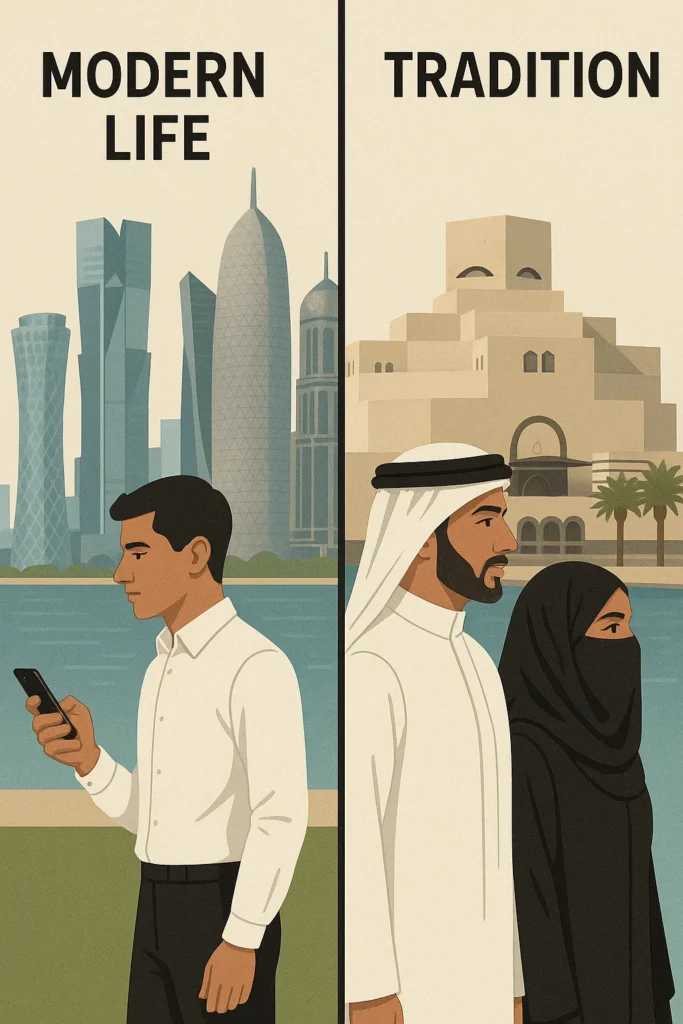
Doha today is a global city with skyscrapers, international businesses, and modern lifestyles. Yet, the life and culture in Qatar continue to preserve traditions.
- Cosmopolitan lifestyle: Expats and locals share urban spaces, but cultural rules remain respected.
- Traditional villages: Outside Doha, smaller towns preserve Bedouin customs more strongly.
- Balancing globalization: While Qatar embraces modern sports, education, and technology, it promotes cultural identity through museums, festivals, and heritage education.
This balance shows how Qatar culture and lifestyle evolve without losing authenticity.
FAQs about Traditions in Qatar
1. What are some traditions in Qatar?
Hospitality, Ramadan fasting, Eid celebrations, majlis gatherings, and wearing traditional clothing.
2. What is Qatar’s traditional dress?
Men wear a thobe with ghutra and agal. Women wear an abaya and shayla.
3. What is the most popular festival in Qatar?
Eid al-Fitr is the most celebrated religious festival, while Qatar National Day is the most important national holiday.
4. What are the family traditions in Qatar?
Strong family ties, respect for elders, and collective decision-making define family traditions.
5. What are Qatar’s customs for tourists and students?
Tourists and students are expected to dress modestly, respect Islamic practices, and observe social etiquette.
Conclusion
The traditions in Qatar are far more than cultural practices—they are the soul of the nation. From the hospitality of serving coffee and dates to the grandeur of Eid celebrations and the simplicity of family gatherings, every tradition reflects respect, unity, and pride. Despite the rapid pace of modernization, Qatar has preserved its heritage, making it a unique society where skyscrapers and souqs exist side by side.
For visitors and expatriates, learning these customs is essential, not just for etiquette but for appreciating the values that define Qatari identity. Whether attending a majlis, enjoying a dish of machboos, or celebrating Ramadan, one experiences the harmony of tradition and modernity that makes Qatar truly remarkable.
Qatar stands as proof that a nation can embrace globalization while staying deeply connected to its roots—an inspiring example of cultural resilience in a changing world.